
Is your Speech Recognition in Windows 11 not working and showing the ‘Listening…’ error message? Learn how to resolve the Windows 11 voice typing error with easy fixes.
Voice input and speech recognition are indispensable tools for navigating and creating content in today’s fast-paced digital age. From writing emails and drafting documents to completely hands-free PC navigation, speech-to-text seamlessly integrates into the Windows 11 ecosystem, making it a go-to tool for both personal productivity and essential accessibility. However, even the most reliable built-in utilities can encounter sudden issues, and one of the most frustrating errors users experience is the speech recognition Windows 11 not working error.
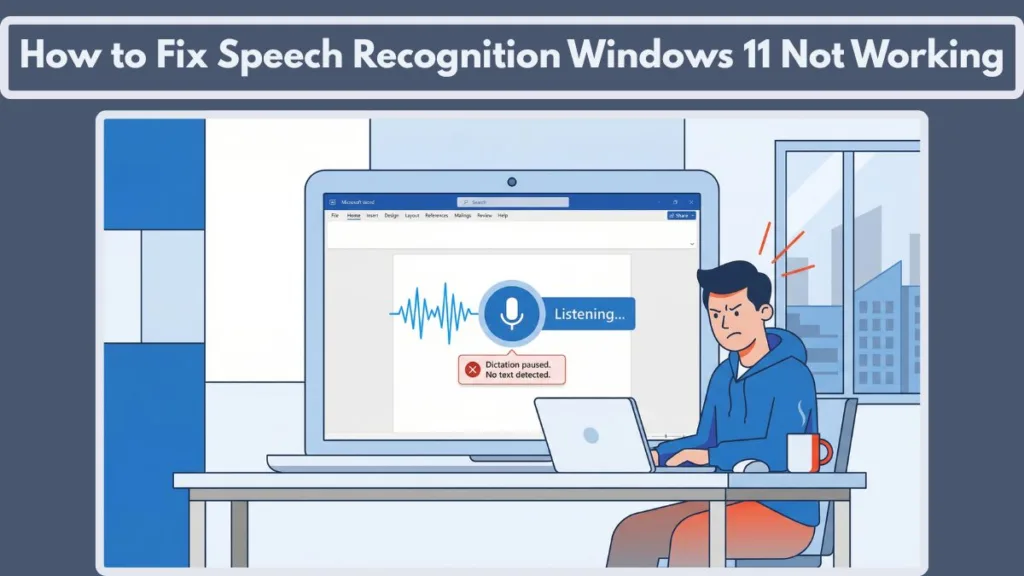
If you’ve ever seen the dictation panel flash and immediately close, or watched your screen display a perpetual “Listening…” message without actually typing your words, you might be wondering why it’s happening and how to fix it. In this comprehensive blog post, we will walk you through the architecture of Windows voice tools, the root causes of these failures, step-by-step solutions, and best practices to prevent the Windows 11 speech services error from disrupting your workflow.
What Does the “Speech Recognition Not Working” Error Mean in Windows 11?
The speech recognition not working message (or silent failure) appears when the Windows 11 operating system is unable to process your audio input due to unmet software requirements, hardware blocks, or service conflicts. Unlike a straightforward error message such as “Microphone unplugged,” this error is typically systemic in nature.
When you encounter this issue, it means Windows 11 could not process your voice request due to technical reasons—most often related to your privacy settings, conflicting legacy software, or issues on Microsoft’s cloud processing end. Understanding why your PC says “Listening” but fails to type will help you identify the exact bottleneck and fix it quickly.
Voice input in Windows is not just a simple microphone-to-text pipeline. It relies on a complex combination of microphone hardware, privacy permissions, background speech processing services (like the Agent Activation Runtime), downloaded language packs, and Microsoft Azure cloud-based recognition engines. If even one of these components is misconfigured, disabled, or corrupted, the entire system halts.
When Does the “Speech Recognition Not Working” Error Appear?
This error can appear under a variety of circumstances depending on which specific voice tool you are trying to use. Before fixing anything, it’s important to clear up confusion: Windows 11 actually includes three different voice systems. There is Windows Speech Recognition (the older, legacy desktop tool), Voice Access (the modern, AI-driven accessibility control feature), and Voice Dictation (activated using Win + H).
Most commonly, users encounter failures under the following situations:
- Dictation Shortcut Failures: If you try to use the lightweight dictation tool to type an email, the Win + H shortcut might open the panel briefly and close, or it might say “Listening” but never transcribe text.
- Voice Access Unresponsiveness: When launching the modern Voice Access app, the software opens but flatly ignores all navigation and clicking commands, even though the microphone meter is moving.
- Language Mismatch Errors: An error appears stating “Speech recognition is not available for the current display language” when you attempt to start voice typing.
- Legacy Engine Conflicts: Sometimes the microphone works perfectly in other apps like Zoom or Microsoft Teams, yet Windows 11 speech recognition is entirely broken inside Word, Notepad, or your web browser due to internal engine clashes.
- Unstable Internet Connection: A slow or intermittent Wi-Fi connection during a dictation session might result in an online speech processing timeout.
Common Causes of the Speech Recognition Error in Windows 11
Why is Windows 11 Saying “Listening” But Not Typing?
Online Speech Recognition is Disabled
One of the most frequent causes of the voice dictation error in Windows 11 is failing to enable online speech recognition in your privacy settings. If you are using the Win + H dictation feature, you must allow Windows to process your voice online.
- What to Do: Navigate to your Privacy & Security settings and ensure Online Speech Recognition is toggled on. If you disabled this during the initial Windows 11 setup for privacy reasons, the lightweight dictation tool will not allow you to submit your voice data, and you’ll face a silent error.
Incorrect Microphone Settings, Permissions, or Outdated Drivers
Another common cause of the voice typing server error is using a microphone that doesn’t meet the system’s requirements or is actively blocked by Windows. This could mean your microphone privacy permissions are toggled off for desktop apps, your input volume is muted in the Sound Control Panel, or you are using corrupted, outdated audio drivers.
- What to Do: Always check the Windows settings to ensure apps are allowed to access your microphone. If you are using an external USB microphone or headset, verify that the manufacturer’s drivers are fully up to date via the Device Manager.
Missing or Mismatched Speech Language Packs
Speech recognition will instantly fail if the language you are speaking does not perfectly match the language pack installed on your machine. Windows is incredibly strict about regional formatting.
- What to Do: Ensure your display language, your keyboard layout, and your downloaded speech pack all perfectly align (for example, ensuring all three are set to English – United States, rather than mixing US and UK English).
Legacy vs. Modern System Conflicts
Many problems happen because users enable the old, legacy Windows Speech Recognition tool but try using the modern Voice Access feature simultaneously. When both are enabled, Windows experiences engine conflicts and rate-limits your inputs.
- What to Do: You must dive into the Accessibility settings and completely disable the deprecated legacy tool so the modern Voice Access engine can take full control of your audio hardware.
Microsoft Azure Server Disruption
Although it’s rare, online dictation errors can also occur if there is an issue with Microsoft’s Azure cloud speech servers. This could be a temporary disruption on their end, causing the cloud-based transcription to fail.
- What to Do: Check online forums or Microsoft’s service status pages. If there is a known server outage affecting Windows services, you’ll need to wait until Microsoft resolves the issue, or switch to the offline Voice Access tool in the meantime.
How to Fix Speech Recognition Windows 11 Not Working Error
Now that we’ve covered the common causes of the error, let’s dive into how to fix it for both basic dictation users and advanced power users.
For Quick Dictation Users (Win + H Shortcut)
Ensure Online Speech Recognition is Enabled
The first step in fixing the Win + H dictation error is to ensure you’re allowing Windows to connect to the cloud. The basic dictation tool leverages Microsoft’s cloud speech services, meaning it requires this permission to function.
- Path: Go to Settings > Privacy & Security > Speech.
- Action: Turn ON Online speech recognition.
- Why It Helps: Enabling this ensures your computer has the proper permissions to securely upload your voice data for instant text processing. Without it, the dictation panel simply refuses to work.
Check Microphone Permissions and Input Levels
If you’re encountering the error where the system cannot hear you, it’s likely because permissions are blocking the audio feed.
- Path: Go to Settings > Privacy & Security > Microphone.
- Action: Make sure Microphone access, Allow apps to access your microphone, and Allow desktop apps to access your microphone are all toggled ON.
- Next, go to Settings > System > Sound > Input, select your preferred microphone, and speak. Ensure the volume meter is bouncing.
- Why It Helps: By explicitly granting permission to desktop apps, you ensure that background Windows services aren’t being blocked by aggressive privacy firewalls.
Install the Correct Speech Language Pack
If you see an error regarding your display language, you need to download the correct files.
- Path: Go to Settings > Time & Language > Language & Region.
- Action: Click the three dots next to your preferred language, select Language options, and click download on the Speech pack. Make sure Basic typing and Text-to-speech are also installed.
- Why It Helps: Local language packs provide the acoustic models Windows needs to understand your specific accent and dialect, preventing immediate rejection of your audio.
Use a Stable Internet Connection
An unstable or slow internet connection can result in a transcription failed message when using Win + H.
- Why It Helps: A steady Wi-Fi or Ethernet connection will ensure that the audio packets upload completely and successfully to Microsoft’s servers without timing out.
For Voice Access & Advanced Users
Disable Old Windows Speech Recognition
When configuring your system for full voice control, it’s critical to restrict access to the old tools. The legacy engine frequently conflicts with the new Voice Access app.
- Path: Go to Settings > Accessibility > Speech.
- Action: Turn OFF the toggle for Windows Speech Recognition.
- Why It Helps: This prevents legacy service hooks from hijacking your microphone, ensuring that only the modern, valid Voice Access engine processes your commands. This is widely considered the most effective “Reddit-approved” fix for overlapping audio bugs.
Restart Hidden Background Speech Services
If it shows “Listening” but doesn’t type, the background services powering the system might be frozen.
- Path: Press Win + R, type
services.msc, and press Enter. - Action: Locate Windows Audio, Windows Audio Endpoint Builder, and Agent Activation Runtime. Right-click each one and select Restart.
- Why It Helps: The Agent Activation Runtime handles wake words and voice triggers. Restarting these foundational services clears out stalled memory states and forces Windows to re-initialize your audio hardware properly.
Run System File Check and Reset Your Profile
If severe corruption is causing the server rejected-style errors locally on your machine, you must repair Windows.
- Action: Open Command Prompt as Administrator and run
sfc /scannow. Once complete, navigate toC:\Users\YourName\AppData\Local\Microsoft\Speech_OneCore\RecoProfilesand delete the folder. - Why It Helps: The SFC scan repairs broken operating system files, while deleting the RecoProfiles folder forces Windows to build a brand new, uncorrupted speech profile the next time you launch the app.
Tips to Prevent the Speech Recognition Error in the Future
Use Dedicated USB Microphones
If audio interpretation keeps causing problems, consider upgrading your hardware. Stop using cheap analog microphones plugged into the 3.5mm jack, as they pick up static interference from the motherboard.
- Why It Helps: Dedicated USB desktop mics (like the Blue Yeti or Elgato Wave) or high-quality USB headsets offer built-in digital conversion, providing a stable, crystal-clear audio feed that the Windows speech engine can easily understand.
Limit Background Noise and Disable Unused Devices
Clearly define your default communication device in the Sound Control Panel. Disable any built-in webcam microphones or laptop mics you aren’t using.
- Why It Helps: Providing the speech engine with a single, isolated audio source without background noise (like fans or TVs) significantly reduces the number of transcription errors and prevents the system from getting confused by competing inputs.
Keep Windows Audio Drivers Updated
For more reliable management of your hardware, frequently check your Device Manager for audio input driver updates.
- Why It Helps: Updated drivers ensure maximum compatibility with the latest Windows 11 feature drops (like the 23H2 or 24H2 updates), preventing sudden system crashes related to hardware handshakes.
Utilize Alternative Software When Needed
If Windows is undergoing server maintenance, rely on stable alternatives. Google Docs Voice Typing (via Chrome) or professional tools like Nuance Dragon offer robust backups.
- Why It Helps: Having a backup tool ensures your productivity workflow is never completely halted by a temporary Windows OS bug.
Is This Error Dangerous?
The speech recognition not working error in Windows 11 is not harmful to your device, your hardware, or your personal data. It is not a virus or malware. It’s simply an indication that the audio processing sequence didn’t meet the necessary software conditions. Once you address the underlying issue (whether it’s logging into your Microsoft account, adjusting privacy toggles, restarting services, or switching microphones), you can resume dictating without any further problems.
FAQ about the Speech Recognition Error in Windows 11
Why is my Windows 11 rejecting my voice typing?
There are several reasons why Windows 11 rejects your voice input. The most common causes include Online Speech Recognition being disabled in your privacy settings, your microphone permissions being blocked for desktop apps, the system language pack being missing or mismatched with your region, or a weak and unstable internet connection causing the cloud upload to fail.
What are the causes of the legacy Speech Recognition conflict in Windows 11?
The conflict typically arises when both the legacy “Windows Speech Recognition” tool and the modern “Voice Access” feature are enabled at the same time. Because they use different underlying background services and processing engines, Windows gets confused about which program should have priority access to your microphone, resulting in a silent failure where neither tool works.
How do I enable speech recognition correctly in Windows 11?
To enable it correctly, you must decide which tool you want. For quick text dictation, go to Privacy & Security settings, enable “Online speech recognition,” and press Win + H. For full hands-free PC control, go to Accessibility > Speech, turn ON “Voice Access,” and make sure you download the required offline language model when prompted.
What are the microphone requirements for Windows 11 Voice Access?
Windows 11 restricts reliable voice access to clear audio inputs. While any standard microphone can technically work, it is highly recommended to use a USB-connected microphone or a dedicated headset positioned close to your mouth. The specific input volume should be set above 80% in the Sound settings to ensure the speech models can accurately detect your consonants.
How to change language settings for Voice Typing?
As a user, you can specify your acceptable language by navigating to Settings > Time & Language > Language & Region. In the settings for your preferred language, click the options menu and download the “Speech” component. Once you set this, the dictation engine will automatically adjust its processing algorithms to match your specific regional dialect and accent.
How to increase accuracy in Windows 11 Speech Recognition?
Currently, Windows 11 Voice Access learns and adapts to your voice automatically over time. However, to immediately increase accuracy, you should eliminate background noise, upgrade to a higher-quality USB microphone, and ensure your audio input sample rate in the legacy Sound Control Panel is set to DVD Quality (48000 Hz) so the engine receives the highest fidelity audio possible.
What to do when Windows 11 Voice Access stops responding entirely?
When the tool completely stops responding and says “Listening” indefinitely, check to see if the Agent Activation Runtime service has crashed. Press Win + R, open services.msc, locate the speech and audio endpoint builder services, and restart them. If the issue persists, try clearing your PC’s cache or performing a Clean Boot to ensure third-party apps aren’t interfering.
Conclusion
The Windows 11 speech recognition not working error can be incredibly frustrating, especially when you rely on it for daily productivity or accessibility. However, by understanding the architectural causes and applying the appropriate solutions, you can resolve it quickly. Whether you’re a casual user writing emails with Win + H or a power user navigating your entire PC with Voice Access, following these steps will help you avoid encountering the error in the future.
By ensuring your online speech permissions are granted, checking microphone hardware and volume levels, unifying your language packs, and disabling outdated legacy tools, you’ll be able to tackle any voice input issues that arise and enjoy a flawless, hands-free Windows 11 experience.
Visit Our Post Page: Blog Page