
Want to fund your classroom without spending your own money in 2026? Learn how to make a teacher wish list on Amazon using simple steps. From setup and item selection to sharing and getting donations. Start building your classroom support system today.
Teachers are the backbone of the educational system, yet they consistently bear a heavy financial burden to ensure their students succeed. The average educator spends upwards of $740 of their own money annually on essential classroom supplies, decor, and learning materials. This creates immense financial pressure and inherently limits the resources available to create a truly dynamic learning environment.
The perfect solution to bridge this funding gap is creating an Amazon Teacher Wish List. This powerful tool transforms how educators access resources by connecting them directly with generous parents, friends, community donors, and local organizations.
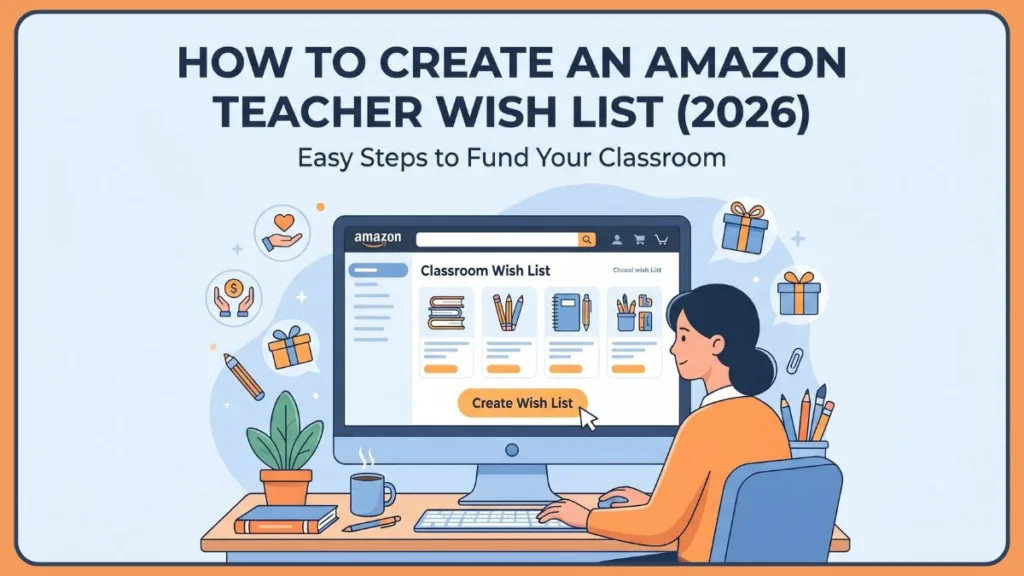
In this comprehensive guide, you will learn the exact blueprint for building a successful Amazon Teacher Wish List. We will cover how to set up your account on both desktop and mobile, what strategic items to include for maximum donor impact, how to seamlessly share your list across multiple platforms, and how to cultivate long-term community support. Be sure to read to the end to access our free downloadable “Amazon Wish List Bundle,” complete with planning tools and donor communication templates.
Recent statistics indicate that the financial strain on educators is worsening, primarily due to inflation pushing the costs of basic educational goods up by 12 to 15 percent over the past few years. Furthermore, the IRS limits the educator expense deduction to a mere $300 for the 2025 tax year, meaning teacher spending own money often goes largely unreimbursed at tax time. Because of this stark reality, learning how to make a teacher wish list on Amazon has become an absolute necessity for modern educators trying to stock their rooms without breaking the bank. Consequently, an effectively structured amazon classroom wish list acts as a lifeline, enabling you to crowdsource classroom supplies directly from a network of supportive individuals.
What Is an Amazon Teacher Wish List and How Does It Work?
An Amazon Teacher Wish List is a specially curated, public-facing registry of classroom needs that allows external supporters to purchase items and have them shipped directly to your school.
While a regular Amazon wish list is typically used for personal shopping or private gift registries, a teacher-focused list is entirely educational, donation-driven, and impact-focused. It functions as a transparent marketplace where the educator identifies a need, the donor fulfills it, and the students reap the immediate benefits.
How the ecosystem works:
- The Educator’s Role: You add specific, necessary items to your digital list, categorizing them by subject, urgency, or project type.
- The Donor’s Role: Parents, community members, or online philanthropists browse the list, select items that fit their budget, and complete the purchase via standard Amazon checkout.
- The Fulfillment: Amazon handles the logistics, shipping the purchased educational materials directly to your designated classroom address, keeping your personal home address entirely private.
When you build a dedicated teacher registry, you also benefit from Amazon’s native tracking algorithms that alert potential donors to price drops. Specifically, if someone saves an item from your list and the price is reduced during a major sale, Amazon automatically sends them a push notification, which frequently prompts immediate parent donations for classroom needs. In addition, the platform features a “Don’t spoil my surprises” toggle that prevents you from seeing what has been bought, while simultaneously hiding those purchased items from other shoppers so you never receive duplicate gifts. Therefore, an amazon teacher gift list functions as a highly organized, automated inventory system that guarantees you only receive exactly what you require.
Why Every Educator Should Create an Amazon Wish List
Relying on school district budgets is often insufficient for creating an engaging, modern classroom. Utilizing a wish list provides a sustainable, practical solution for classroom support that benefits everyone involved in the educational ecosystem.
Benefits for the Educator
It immediately reduces the financial burden and out-of-pocket spending that plagues the profession. Furthermore, it simplifies supply management by consolidating all needs into one easily trackable digital location, preventing the accumulation of redundant supplies.
Benefits for the Students
A well-funded classroom provides students with access to high-quality, modern learning tools. This leads to more engaging, interactive lessons, hands-on STEM opportunities, and an overall improved, comfortable classroom environment that fosters academic growth.
Benefits for the Parents and Community
Many parents and local businesses want to help but do not know exactly what the classroom needs. The wish list provides an incredibly easy, frictionless way to contribute. It offers clear visibility into the direct impact of their donation and builds a much stronger, collaborative connection between the community and the school.
Furthermore, gathering back to school teacher supplies through a digital registry minimizes the logistical headache of hauling heavy boxes from local retail stores to your campus. As a result, you preserve your physical energy for actual teaching, rather than exhausting yourself transporting heavy materials. Understanding how to create an Amazon teacher wish list also empowers educators to easily request highly specific items that local stores might not even carry. Ultimately, utilizing an amazon wish list for school supplies democratizes the funding process, allowing anyone with internet access to pitch in for the upcoming semester.
How to Create an Amazon Teacher Wish List (Step-by-Step)
Setting up your list correctly from the beginning is vital for maintaining professional boundaries and ensuring items actually reach your classroom. It is highly recommended to use a professional or school-issued email address to lend credibility and completely separate your classroom donations from your personal Amazon order history.
Setting Up on Desktop
- Log In and Navigate: Go to Amazon.com, log into your professional account, and hover over the “Account & Lists” dropdown in the top right corner.
- Initialize the List: Click “Create a List.”
- Name Your List Strategically: Choose a clear, highly searchable name that leaves no ambiguity. A format like “Mr. Cicco’s 4th Grade Math – Lincoln Elementary” is highly effective.
- Add Your Vision: Include a short, compelling description explaining your classroom goals, your teaching philosophy, and exactly how these materials will support student learning.
- Configure Privacy and Shipping: Click the three dots (…) at the top right of your new list and select “Manage List.” Change the privacy setting to “Shared” or “Public.”
- Secure Your Address: Scroll down to the shipping address section. Select “Create New” and input your school’s physical address. Check the box for “Keep purchased items on your list” if you want recurring supplies, and ensure third-party shipping is enabled so independent sellers can fulfill orders. Click “Save Changes.”
As you optimize your wish list settings, always ensure that the “Keep purchased items on your list” option is unchecked if you only need one of a specific item. On the other hand, if you are requesting consumable classroom supplies like pencils or sanitizing wipes, leaving that box checked allows donors to continuously replenish your stock throughout the entire school year. Additionally, navigating to your list’s primary configuration menu gives you the exact tools needed to ensure your amazon wish list public visibility is correctly established for searchability.
Setting Up on the Mobile App
- Access the App: Download and open the official Amazon Shopping application on your smartphone.
- Navigate to Lists: Tap the three horizontal lines (hamburger menu) in the bottom right corner and select “Lists.”
- Create the Registry: Tap the “+” or “Create a List” button at the top of the screen.
- Input Details: Provide your clear, recognizable classroom name and detailed description.
- Adjust Settings: Tap the three dots (…) in the upper right corner to access “Manage List.” Change your privacy setting to Shared or Public, and meticulously update the shipping destination to your school’s address.
- Populate and Share: Begin browsing the app to add items, and utilize the “Invite” button to generate a shareable link directly from your phone.
Mobile users can also take advantage of robust voice integration by simply using the phrase “Alexa, add to list amazon” when they realize they need a new item mid-lesson. This means that to create amazon wish list for classroom success, you can build your entire inventory hands-free while actively teaching or cleaning up at the end of the day.
What to Add to Your Amazon Teacher Wish List
To build a highly effective wish list that converts views into donations, you must curate a diverse selection of items. Including a strategic mix of low-cost consumables and high-value, long-term investments ensures donors of all financial backgrounds can contribute meaningfully.
| Category | Suggested Items | Classroom Impact |
| Classroom Essentials | Pencils, dry erase markers, notebooks, copy paper, sticky notes, large erasers. | Keeps daily operations running smoothly without the teacher constantly running to the store. |
| Books & Literacy | Age-appropriate chapter books, diverse picture books, curriculum-aligned non-fiction, graphic novels. | Expands the classroom library to accommodate different reading levels and cultural backgrounds. |
| Educational Tools & Games | Floor puzzles, vocabulary flashcards, math manipulatives (counting bears, fraction tiles). | Transforms abstract concepts into hands-on, tangible learning experiences. |
| STEM & Technology | Introductory robotics kits, noise-canceling headphones, tablet stands, multi-device charging stations. | Prepares students for a digital world and supports individualized, app-based learning blocks. |
| Decor & Flexible Seating | Educational posters, motivational wall art, bean bag chairs, wobble stools, floor cushions. | Creates a dynamic, welcoming, and comfortable physical environment that accommodates different learning styles. |
| Organization & Storage | Color-coded storage bins, rolling utility carts, bookshelf organizers, desk caddies. | Maintains a tidy, efficient classroom where students know exactly where to find and return materials. |
| Special Needs & Inclusion | Sensory fidget tools, weighted lap pads, visual schedule boards, adaptive grip pencils. | Ensures the classroom is deeply inclusive and supportive of neurodivergent students or those with IEPs. |
| Hygiene & Health Supplies | Facial tissues, hand sanitizer pumps, antibacterial surface wipes, spare band-aids. | Reduces the spread of germs during cold and flu season, keeping attendance rates higher. |
| Teacher Support Items | Books on pedagogy, gift cards (Amazon, Teachers Pay Teachers), an ergonomic desk chair, a quality coffee mug. | Prevents educator burnout by providing the professional and personal comforts necessary to lead effectively. |
Pro Tip for Adding Items: Never leave the default product description. Add a custom note explaining how the item helps. For example: “These specific headphones are essential for our daily 20-minute independent audiobook station, allowing students to focus without distraction.”
Whenever you begin requesting classroom resources for teachers, it is smart to analyze community trends to see what items typically get funded the fastest. For instance, high-quality sensory tools and diverse classroom library expansions tend to generate immediate emotional connections with community philanthropists. Moreover, regularly updating your selection ensures that whenever a donor is ready to contribute, they always have fresh, relevant choices to support your students.
How to Organize Your Wish List for Maximum Impact
A chaotic, endlessly scrolling list overwhelms potential donors. Structuring your list strategically increases trust and drives more contributions.
- Divide into Logical Categories: Group your items so donors understand the purpose. Keep immediate needs at the top, seasonal project supplies in the middle, and long-term, high-ticket “dream” items at the bottom.
- Prioritize Items: Utilize Amazon’s native “Sort by” menu and the item priority settings (ranging from “Lowest” to “Highest”). This visually signals to donors which supplies are urgently needed for the upcoming week versus nice-to-have items for the spring semester.
- Maintain List Hygiene: Dedicate ten minutes a month to auditing your list. Remove items that are no longer relevant to your curriculum, update quantities for consumables you have run out of, and ensure discontinued items are replaced with active listings.
Beyond basic sorting, adding personalized notes to each item is a proven strategy to significantly increase your funding success rate. Specifically, when a donor understands exactly how a particular set of markers will be used for a specific art project, they are far more motivated to complete the purchase. Therefore, viewing your list as a storytelling platform rather than a simple catalog transforms casual browsers into dedicated supporters.
Proven Strategies to Share Your Teacher Wish List
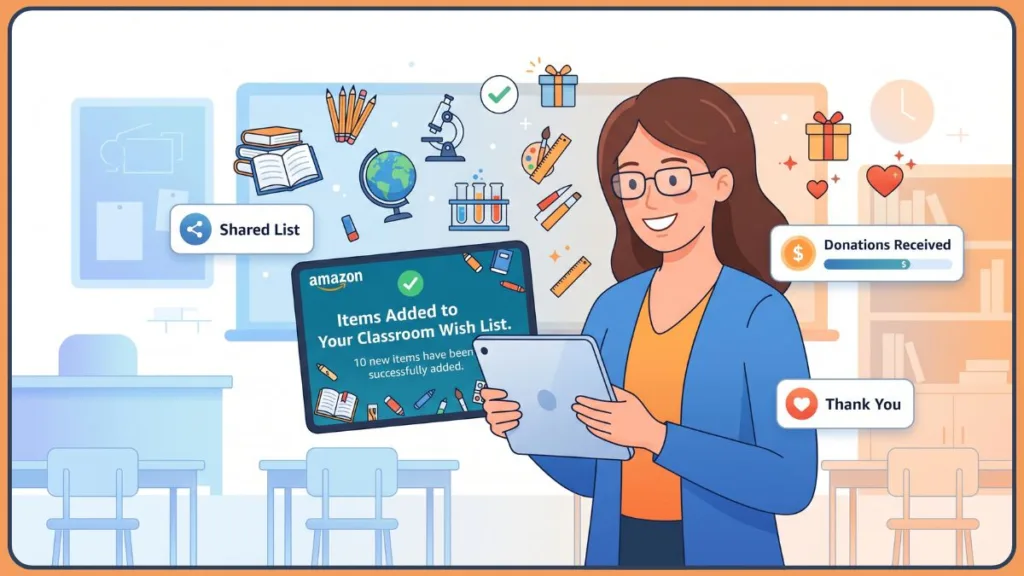
Creating the list is only step one; actively marketing it to your community is where the funding actually happens. To share your list, navigate to your Amazon list page, click “Invite” or “Send List to Others,” select the “View Only” option so the list cannot be altered, and copy the link.
Share Directly with Parents
Direct communication is incredibly effective. Embed your link in your introductory welcome emails at the start of the year. During Back-to-School nights and parent-teacher conferences, print out a scannable QR code that links directly to your list and tape it to your desk or classroom door.
Leverage Official School Channels
Take advantage of existing school infrastructure. Ask to have your link included in the weekly school newsletter or principal’s update. Share it inside parent communication apps like ClassDojo or Remind. Additionally, present your list to the PTA or PTO; these organizations frequently look for structured ways to allocate their budget directly to teacher needs.
Maximize Social Media Reach
Broaden your donor pool beyond your immediate network. Share your link on Facebook, Instagram, TikTok, and LinkedIn. When posting, tell a brief story about what your classroom is currently learning. Capitalize on massive online philanthropic movements by utilizing highly tracked hashtags such as #ClearTheList, #ClearTheList2025, #TeacherGram, and #PostForPencils.
Generating the link is just the first step, so mastering how to share amazon teacher wish list URLs effectively means tapping into viral social media campaigns. The clear the list initiative has grown into a massive national movement where celebrities, businesses, and strangers actively search for the #clearthelist tag to fund educator requests during the late summer months. By participating in these online events, you easily reach benevolent donors who actively want to alleviate the financial pressures surrounding classroom donations.
How People Can Find Your Amazon Wish List
Understanding how donors search is a massive advantage. While direct link sharing is the most common acquisition method, strangers and community philanthropists often use Amazon’s native “Find a List or Registry“ search feature.
This is why naming your list properly is critical for discoverability. If your list is named “My Stuff,” no one will find it. If your list is named “Mrs. Smith’s 2nd Grade Class – Washington Elementary,” a local business owner searching for “Washington Elementary” on Amazon can easily locate your registry and clear your list.
Interestingly, many major corporations and local businesses assign administrative assistants to scour the platform for nearby schools to support during their annual philanthropic initiatives. Thus, keeping your school’s exact name and your specific grade level in the title acts as natural search engine optimization within Amazon’s own directory.
Expert Tips to Make Your Teacher Wish List Successful
- Write Compelling, Emotion-Driven Descriptions: Do not just list items; explain the educational transformation the item will bring. Connect the product to a specific student outcome.
- Embrace Price Diversity: A $5 pack of sticky notes is just as important as a $150 tablet. Price diversity ensures that college students, young families, and wealthy donors all have a price point they feel comfortable funding.
- Share Your Classroom Vision: Use your list description bio to tell a story. Speak about your passionate approach to teaching, the specific demographics of your students, and the holistic environment you are trying to build. Emotion drives donations.
Additionally, consider creating separate, themed mini-lists for distinct events like “Winter Science Project” or “Spring Reading Drive” to create a sense of urgency. Consequently, donors feel like they are contributing to an immediate, tangible goal rather than just adding random items to a never-ending repository.
Common Mistakes to Avoid
- Leaving the List on “Private”: The single most common error. Double-check that your list is set to “Shared” or “Public,” otherwise your links will lead to error pages.
- Exposing Your Home Address: Forgetting to manually add your school address means items will default to your home address, or worse, donors will see your personal street address during checkout.
- Adding Non-Educational Clutter: Adding personal clothing or household items to a classroom wish list immediately breaks donor trust. Keep the list strictly professional and student-focused.
- Ghosting Your Donors: Failing to communicate with donors after items arrive guarantees they will never donate again.
Step 6: Foster Long-Term Donor Relationships
Securing a donation is wonderful, but retaining a donor for years is transformative. Building a supportive ecosystem around your classroom requires active, ongoing gratitude.
Always acknowledge every single contribution, regardless of size. Utilize Amazon’s “Thank You List” feature to see who purchased specific items. Send handwritten thank-you notes home with students, or send personalized emails to community donors.
Furthermore, provide tangible updates. Share photos on your professional social media or in parent newsletters showing the students actively using the new STEM kits or lounging in the newly donated bean bag chairs. Always adhere to your school’s privacy and photo policies regarding student faces. When donors see the joy and utility their money provided, you build deep trust and encourage repeat support for the next school year.
Frequently Asked Questions (FAQs)
How do I create an Amazon teacher wish list?
Log into your Amazon account, navigate to “Account & Lists,” and select “Create a List.” Name it clearly with your grade and school, set the privacy to “Shared,” and update the shipping destination to your school’s address.
Is an Amazon wish list free for teachers?
Yes, creating, managing, and sharing an Amazon Wish List is 100% free for educators. You only need a standard Amazon account to begin.
Can anyone donate to a teacher wish list?
Yes. Anyone with an Amazon account who clicks your shareable link or searches for your public registry can purchase items for your classroom.
How do I keep my home address private?
In your list settings, under the “Shipping Address” section, enter your school’s physical address. Amazon automatically hides the specific street address from buyers during checkout, only displaying your name, city, and state to protect your privacy.
Can you see who bought off your Amazon wish list?
Yes. Inside your list interface, there is a “Thank You List” feature. This tracks which items were purchased and provides the donor’s name and billing address (if they opted to share it), allowing you to easily send thank-you notes.
What should teachers include in their wish list?
Include a diverse mix of classroom essentials (pencils, paper), educational tools (books, manipulatives), technology accessories, organization bins, and hygiene supplies. Ensure there is a wide variety of price points to accommodate all budgets.
Final Thoughts
Creating a teacher wish list on Amazon is vastly more than just a convenient way to collect pencils and paper. It is a proactive strategy to build a supportive, invested ecosystem around your classroom. By structuring your list thoughtfully, updating it regularly, and actively building relationships with your donors, you reclaim your personal finances while simultaneously providing your students with the high-quality educational experience they deserve.
Start building your list today, share it boldly with your community, and continuously refine it as your students’ needs evolve.
Visit Our Post Page: Blog Page
Discover more from Izoate
Subscribe to get the latest posts sent to your email.