
Wondering if you need to play the original Control before Control Resonant? Discover the answer, plus essential story details and the best early weapon builds.
The wait is finally over. Control Resonant is out now globally as of today, September 24, 2026. Co-financed by Annapurna Pictures and developed by Remedy Entertainment, this highly anticipated action-RPG follow-up moves players out of the claustrophobic, brutalist walls of the Oldest House and thrusts them into a twisted, supernatural quarantine zone in downtown Manhattan.
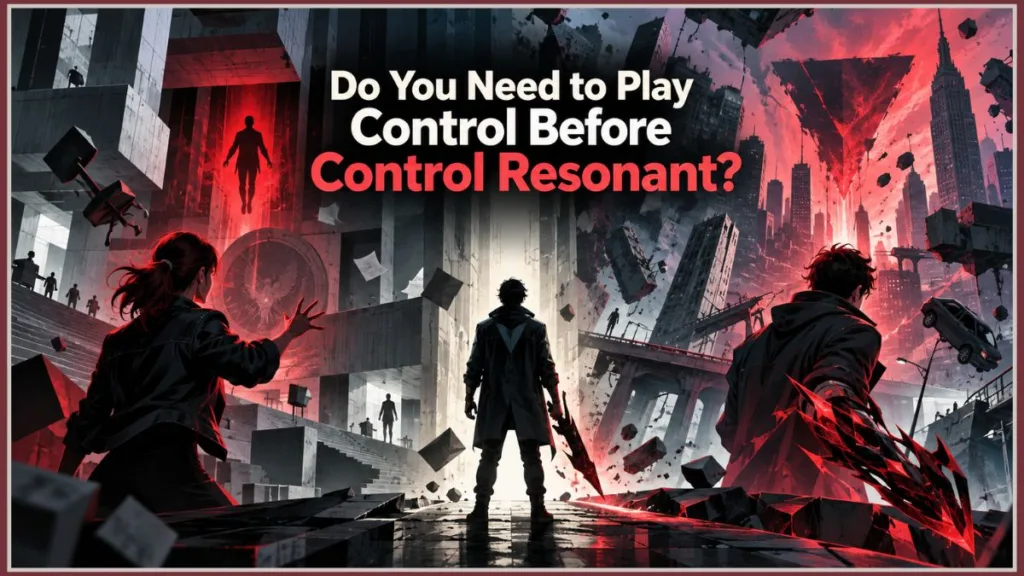
This isn’t just a simple continuation. Remedy has made bold changes to the formula—introducing a brand-new protagonist, an overhauled melee combat system, and a major shift in level design. If you are preparing to dive into the Remedy Connected Universe’s latest chapter, this complete guide breaks down everything you need to know about the lore, mechanics, best early builds, and whether you can skip the 2019 original.
Release Date, Platforms, and File Sizes
Control Resonant officially launched today for digital storefronts across PlayStation 5, Xbox Series X|S, and PC (via Steam, Epic Games Store, and GeForce NOW). Physical editions for consoles will follow on October 15. If you purchased the Digital Deluxe Edition on PS5, you’ve likely already been playing since the 48-hour early access period began on September 22.
Before you start your download, ensure you have enough space on your drive. Here are the confirmed install sizes:
- PlayStation 5: 89.27 GB
- PC (Steam & Epic Games Store): 85.97 GB
- Xbox Series X|S: 106.08 GB
Storage Warning: Day-one patches and shader cache compilation on PC will require an additional ~15 GB of free space during the unpacking process. Make sure you leave some extra room on your SSD!
Is Control Resonant Actually Control 2?
Yes. Do not let the subtitle fool you—this is a true, mainline sequel directed by Mikael Kasurinen and written by Clay Murphy alongside Creative Director Sam Lake.
Why is it called Control Resonant instead of Control 2? The decision largely comes down to search engine optimization (SEO) and marketing. The word “Control” is notoriously generic, making the original game difficult to search for without bringing up unrelated definitions or tech products. Adding the “Resonant” subtitle makes the new game immediately distinct and highly searchable. It also serves as a friendlier entry point for newcomers who might be intimidated by a numbered sequel.
The Story So Far: Where is Jesse Faden?
Control Resonant picks up seven years after the events of the first game. Just before a city-wide lockdown, a new cosmic anomaly known internally as “The Pattern” surfaced in New York. This compounding crisis allowed The Hiss—the parasitic resonance from the first game—to finally break containment from the Oldest House and spill into Manhattan.
The Federal Bureau of Control (FBC) has lost control of the city, and worse, Director Jesse Faden has gone missing. In her absence, familiar faces have stepped up: Emily Pope is now acting as the Co-Director of the FBC, while Simon Arish serves as Security Chief. Out of desperation, the FBC awakens a new weapon from a seven-year coma to deal with the crisis: Jesse’s brother, Dylan Faden.
Do I Need to Play Control Before Control Resonant?
While Remedy designed the narrative to be accessible to newcomers, this is a direct continuation of the lore and world-building established in 2019. The overwhelming consensus from the player community is that you should finish the original game and its DLCs before starting the sequel.
The primary reason is Dylan’s backstory. In Control Resonant, Dylan isn’t a traditional hero. He is a former Prime Candidate who was subjected to abusive FBC experiments, became a mass murderer while possessed by the Hiss, and is now effectively a prisoner on a leash. Security Chief Simon Arish openly distrusts him, and understanding Dylan’s tragic past makes his redemption arc significantly more impactful.
Lore Tip: If you want the full picture, make sure you finish the AWE and The Foundation DLCs from the first game. The events of The Foundation heavily foreshadow the interdimensional rifts now tearing apart Manhattan.
How to Use Assist Mode in the Original Control
A common reason many players abandoned the original Control was its notorious difficulty spikes. If you want to experience the lore without the frustration, you can use the game’s built-in Assist Mode to breeze through the combat.
- Pause the game or open the Main Menu.
- Navigate to Options, then scroll down and select Gameplay.
- Scroll to the bottom of the Gameplay menu to find the Assist Mode section.
- Check the box to Enable Assist Mode.
- Toggle on your preferred advantages (e.g., set Damage Reduction to 100%, enable Immortality, or toggle One-Hit Kills).
Note: Enabling these settings does not disable trophies or achievements, so you can still 100% the game.
Gameplay Changes: From Shooter to Action-RPG
Remedy estimates that Control Resonant will take around 30 hours to complete the core story, and up to 50 hours for a completionist run. A massive part of this expanded runtime is the game’s pivot away from traditional third-person shooting into a full-fledged Action-RPG with deep build crafting, heavily inspired by titles like Neon Genesis Evangelion and Attack on Titan.
The ‘Aberrant’ Weapon and Melee Combat
Dylan does not use a gun. His primary tool is “The Aberrant”—a supernatural, shapeshifting Object of Power. Combat is fast, nimble, and highly reminiscent of character-action games like Devil May Cry. You can equip up to three forms at once and seamlessly transform the Aberrant mid-combo into:
- Twin Daggers: Best for rapid strikes and building stagger meters.
- A Scythe: Ideal for sweeping crowd control when surrounded by Mold foes.
- Gauntlets: Perfect for heavy, close-quarters pummeling.
- A Massive Hammer: Used for slow, devastating Falter damage against large targets.
Combat Tip: Do not play this like a cover shooter! Control Resonant rewards aggression. Like the first game, enemies only drop health elements when you damage them, so pushing the offensive is your best method of survival.
Dylan is incredibly agile. You can cancel out of attack animations instantly with an airdash, glide using a hookshot-like ability, and juggle enemies in the air. Both Dylan and the Aberrant feature extensive skill trees, allowing you to unlock abilities like summoning minions to hurl as living bombs, or the Ignite power, which sets your weapons ablaze to inflict Burn status (incredibly useful for shedding the poisonous mold enemies).
Open-Ended Manhattan and “Shift” Gravity
Lead gameplay designer Sergey Mohov has clarified that Control Resonant is not a massive, empty open world. Instead, it features “open-ended” level design with large, distinct zones (like the underground Metro Faults) folded in on themselves by interdimensional isolation.
To navigate this, Dylan utilizes the new “Shift” mechanic. The game allows players to literally re-orient their gravitational center. If a building is warped onto its side or a street is floating upside down, Dylan can shift his gravity to run along walls or ceilings. This turns both combat encounters and traversal into a mind-bending puzzle, allowing you to seamlessly transition between different planes of existence during a single fight.
Shift Warning: Keep an eye on your reticle’s orientation meter when shifting! Flipping gravity mid-air without a solid surface beneath your new orientation will cause a lethal fall.
Best Early Game Weapon Builds and Finishers
Making the right choices for your Aberrant forms and Combo Finishers early on can make a massive difference, as resources like Living Shards take time to accumulate. Based on the fast-paced combat and the unrelenting swarms of Hiss enemies, here are the best early unlocks to prioritize:
Best Primary Form: Strike
When you first wake up as Dylan, you will have to choose a Primary Form. You should pick Strike.
- What it is: A dual-wield dagger form focused on extreme speed.
- Why it’s the best: Strike features a baseline 30% critical hit chance and rapid attack animations that allow you to quickly build stagger meters and safely dodge out of enemy attack strings. It is incredibly forgiving for new players while maintaining top-tier damage output against massive groups.
Best Secondary Form: Crush
Eventually, you will unlock a Secondary Form (heavy attack). The best option here is Crush.
- What it is: A massive, slow-swinging hammer.
- Why it’s the best: Even without upgrades, Crush solves one of the biggest problems in the early game: getting overwhelmed. Hitting an enemy with Crush knocks them down completely, giving you essential breathing room. Once you upgrade it to access its launch combo, you can juggle enemies in the air by canceling your recovery animations with dodges.
Best Combo Finisher to Unlock First: Wide Edge
Once your Aberrant Strength reaches level 15, you can travel to the monolith in The Gap and spend a Living Shard (earned from level bosses or bought for 4,000 Source) to unlock one of six Combo Finishers. You trigger these by spamming the attack button (Square/X) at the end of a primary combo.
You should unlock Wide Edge first.
- What it is: A powerful, wide-sweeping attack that deals the highest single-hit damage of any finisher and pushes enemies away.
- Why it’s the best: Aside from the massive damage and crowd-control benefits, Wide Edge has one of the best upgrade trees. You can quickly unlock “A Healthy Approach,” which gives every hit a +10% chance to drop Health Elements. Having a reliable way to heal yourself during a massive combo is invaluable.
Resource Tip: Do not waste your first few Living Shards on minor passive stat boosts in the skill tree. Unlocking new forms and combo finishers provides a much larger spike in your overall combat effectiveness.
Visit Our Post Page: Blog Page
Discover more from Izoate
Subscribe to get the latest posts sent to your email.